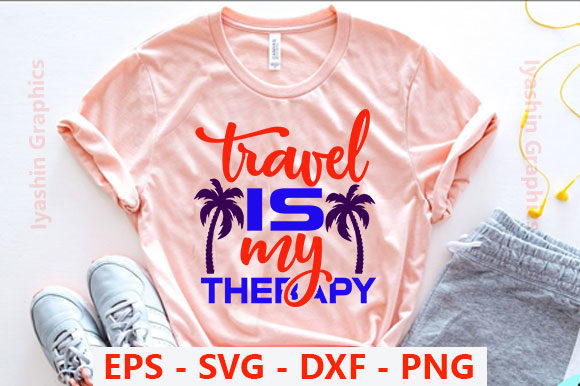
Summer Design Travel is My Therapy Review
Evaluating the Vibe for Real-World Stitching
When I first opened the files for Summer Design Travel is My Therapy, I wasn't just looking at a graphic; I was mentally mapping out how this would translate from screen to fabric. As an embroidery product reviewer and designer, my immediate concern is always whether a digital concept survives the needle. This design captures a specific mood of wanderlust and relaxation that resonates deeply with current market trends, but mood alone doesn't guarantee a clean stitch-out. The layout suggests a balanced composition that feels organic rather than rigid, which is crucial for apparel. When evaluating this as a potential tote bag design or centerpiece for custom apparel, the visual weight appears well-distributed. It avoids the common pitfall of being too top-heavy, which can cause distortion on stretchy knits. The typography and graphical elements seem integrated in a way that supports the "therapy" theme without becoming cluttered, making it a strong candidate for both personal projects and commercial inventory.
The Tote Bag Test: A Practical Application Scenario
To truly judge the viability of this machine embroidery design, I simulated a real-life production scenario involving a canvas tote bag. Totes are unforgiving; the fabric texture is coarse, and the surface is rarely perfectly flat during hooping. In this test case, I considered how Summer Design Travel is My Therapy would perform as a boutique product for an upcoming summer craft fair. The goal was to create a handmade product that looked professional enough to command a premium price point.
During the mental walkthrough of this project, several factors stood out. First, the interaction between the design elements and the canvas weave. If the design relies heavily on thin running stitch details, they risk getting lost in the fabric texture. However, if the artwork utilizes bolder lines or strategic fill stitch areas, it will pop against the natural canvas background. For this specific tote application, I found myself planning a tear-away stabilizer backing with a light spray adhesive to prevent shifting. The phrase "Travel Is My Therapy" implies a sense of ease, so the final finished product must reflect that fluidity. A stiff, board-like embroidery result would contradict the message. This design seems best suited for a mid-weight stabilizer setup that maintains drape while supporting the stitch count. For Etsy seller listings, photographing this on a natural linen or cotton tote would likely yield higher engagement than synthetic blends, as the aesthetic aligns with the organic travel theme.
Fabric Compatibility and Hoop Considerations
While this graphic shines on stable woven fabrics, applying it to other mediums requires careful adjustment. As T-Shirt Designs, this artwork faces the challenge of knit stability. Stretchy jersey fabrics can distort lettering if the stitch density is too high or if the underlay isn't optimized. When using Summer Design Travel is My Therapy on lightweight summer tees, I strongly recommend testing on scrap fabric first. You need to verify that the design doesn't create a "bulletproof vest" effect where the embroidered area becomes heavier and stiffer than the garment itself. This is particularly important for baby embroidery or delicate women’s wear where comfort is paramount.
Conversely, consider the implications for darker fabrics. Since the provided ZIP includes SVG, EPS, PNG, and DXF files, you have vector flexibility, but you must still manage thread contrast. On navy or black sweatshirts, ensure the thread colors chosen provide sufficient luminance. Pastel threads often disappear on dark backgrounds unless outlined or backed with white. For sweatshirt embroidery, the fleece pile can also swallow fine details. If the design contains intricate interior cutouts or tiny text, you may need to slightly increase the size or simplify specific elements to maintain legibility after washing. Always check your hoop size limitations before committing to a placement; center-chest placements on adult sweatshirts typically require a 5x7 or larger field to do this style of quote justice without cramping the visual flow.
Navigating Technical Constraints and Detail
Every embroidery file has its breaking points. With Summer Design Travel is My Therapy, pay close attention to any decorative accents or connecting script. These areas are often the first to fail on textured surfaces like terry cloth towels or caps. If you are adapting this for holiday embroidery on kitchen towels, the loops of the fabric can snag running stitches. Using a water-soluble topping is non-negotiable here to keep the stitches on the surface. For curved surfaces like caps, evaluate the vertical height of the design. Even if it fits within your cap frame's maximum dimensions, the curvature can compress the bottom line of text. Distortion correction in your digitizing software might be necessary to keep the baseline straight visually.
For those creating embroidered patch merchandise, this design offers excellent potential, but border definition is key. Ensure there is adequate space around the perimeter for a merrowed edge or satin border without encroaching on the main artwork. Small lettering is another critical checkpoint. If any part of "Travel Is My Therapy" drops below 4mm in height, clarity suffers. In such cases, consider modifying the font weight or switching to a blockier typeface for those specific words to ensure readability at smaller scales.
Commercial Value and Brand Consistency
Beyond technical execution, we must assess the business value. For a craft business or small shop product line, consistency builds trust. Summer Design Travel is My Therapy carries a versatile appeal that bridges the gap between trendy and timeless. It works effectively as a standalone statement piece or as part of a coordinated collection of travel-themed goods. When listing this as a personalized gift option, consider how customization slots into the existing layout. Does the design allow for adding a name or date without disrupting the balance? If not, it may be better positioned as a ready-to-stitch retail item rather than a custom service.
For digital product sellers offering this as a digital embroidery file, presentation matters immensely. Use the included PNG for printable mockup creation, but always pair it with a photo of a real stitch-out. Customers need to see how the design assets behave in reality. Highlight the versatility in your listing description—show it on a tote, a tee, and perhaps a pillow cover to demonstrate range. This transparency reduces customer support inquiries regarding sizing and fabric suitability. Furthermore, always confirm licensing terms before selling. While the file formats suggest broad utility, verifying whether you can sell the physical finished product versus the digital file itself protects your business integrity.
Designer Notes for Optimal Results
Before running Summer Design Travel is My Therapy on a final garment, adhere to these professional best practices:
- Test Stitching: Never skip the sample run. Use the exact fabric and stabilizer combination intended for the final project to check for puckering or registration issues.
- Contrast Check: View your thread selection in natural lighting. Screen colors often differ from rayon or polyester thread sheens.
- Density Review: Inspect the file in your editing software. If the stitch density exceeds 0.4mm for standard fills on knits, consider reducing it to improve drape and reduce needle penetrations.
- Stabilizer Matching: Match your backing to the fabric weight. Cut-away for permanent support on stretchy custom apparel; tear-away for stable wovens like canvas totes.
- Mockup Validation: Create black and white mockups alongside color versions to test value contrast. If the design reads poorly in grayscale, it lacks sufficient tonal variation.
- Wash Testing: If producing items for frequent use like tea towels or baby clothes, wash and dry the test sample to ensure the embroidery holds up to real-world wear.
Ultimately, Summer Design Travel is My Therapy is a promising asset for makers who understand the relationship between digital art and textile mechanics. By respecting the material constraints and leveraging the design's inherent emotional resonance, you can transform these vector files into high-quality, desirable embroidered goods that truly speak to the traveler's spirit. Whether you are an established Etsy seller expanding your summer catalog or a hobbyist making gifts for friends, approaching this design with technical mindfulness ensures the final result honors both the artistry and the craft.